
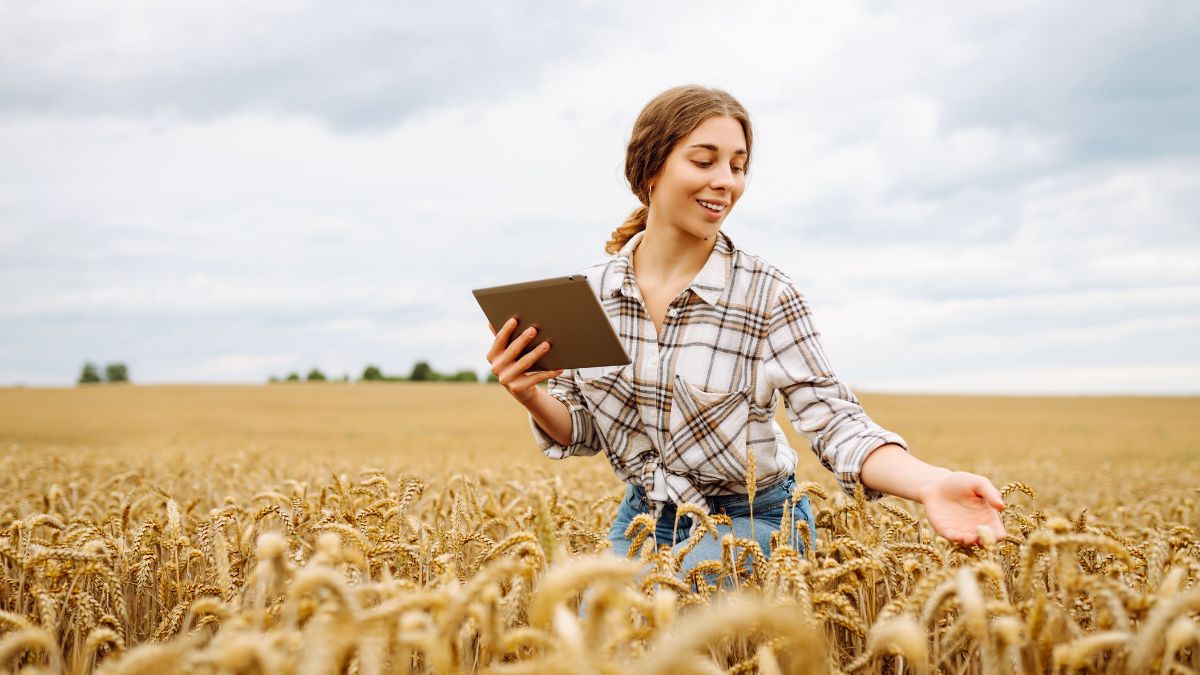
Modern agriculture is undergoing a digital revolution. Smart farming technology—a blend of data-driven tools, automation, and artificial intelligence—is reshaping the way crops are grown, managed, and harvested. These innovations are helping farmers boost productivity, reduce costs, and protect the environment.
In this article, we explore how smart farming technology is revolutionizing crop production and shaping the future of food.
What Is Smart Farming?
Smart farming, also known as precision agriculture, uses technology to monitor, analyze, and manage farming operations with precision and efficiency. It incorporates tools such as:
- GPS-guided tractors
- Drones and remote sensors
- Artificial intelligence (AI)
- Internet of Things (IoT) devices
- Big data analytics
Together, these tools allow farmers to make informed, data-driven decisions about when, where, and how to grow crops for maximum efficiency.
6 Ways Smart Farming Is Transforming Crop Production
1. Precision Planting and Seeding
Using GPS technology and sensor data, smart tractors and seeders can plant crops at the optimal depth and spacing, depending on soil condition, moisture, and terrain.
Benefits:
- Reduces seed waste
- Ensures uniform growth
- Maximizes field efficiency
2. Real-Time Monitoring with IoT Sensors
IoT-based sensors placed in fields collect real-time data on:
- Soil moisture and temperature
- Nutrient levels
- Weather patterns
This helps farmers track crop health and respond quickly to environmental changes or threats like drought or pest outbreaks.
3. AI-Powered Crop Analytics
Artificial intelligence processes massive amounts of data to:
- Predict yield
- Detect diseases early
- Recommend treatments and schedules
For example, AI software can analyze leaf color and shape to identify nutrient deficiencies or infections, often before they become visible to the human eye.
4. Smart Irrigation Systems
Smart irrigation systems use moisture sensors and weather forecasts to water crops only when and where needed.
Benefits:
- Saves water
- Prevents overwatering
- Improves crop health and yield
5. Drones and Aerial Imaging
Drones equipped with multispectral cameras fly over fields and provide detailed images to assess:
- Plant health
- Growth stages
- Pest infestations
These images help identify problem areas and apply targeted interventions.
6. Automated Machinery and Robotics
Robots and autonomous tractors now perform tasks such as:
- Seeding and fertilizing
- Weeding
- Harvesting crops
This reduces reliance on manual labor and increases consistency and speed.
7. Blockchain and Farm Management Software
Blockchain technology ensures traceability and transparency in the crop supply chain, while farm management apps track:
- Input usage
- Crop schedules
- Financial performance
This helps farmers stay organized and make smarter business decisions.
Smart Farming Technologies vs Traditional Farming
| Feature | Traditional Farming | Smart Farming Technology |
|---|---|---|
| Seeding | Manual/Basic equipment | GPS-guided precision planting |
| Irrigation | Timed/manual | Sensor-based smart irrigation |
| Crop Monitoring | Visual inspection | Drones, IoT sensors, AI tools |
| Fertilizer/Pesticide Use | Blanket application | Site-specific, data-driven |
| Harvesting | Labor-intensive | Robotic/autonomous machines |
| Decision Making | Experience-based | Data-driven and predictive |
Environmental Benefits of Smart Farming
Smart farming promotes sustainability through:
- Reduced use of water and chemicals
- Healthier soils from precision treatments
- Lower carbon footprint with efficient machinery
These practices support climate-smart agriculture, helping to combat global challenges like soil degradation and water scarcity.
Future Outlook
Smart farming will continue to evolve with advancements in:
- 5G connectivity in rural areas
- Machine learning models for yield forecasting
- Integration with satellite data
These improvements will make high-tech farming more accessible to small and mid-size farms, not just large agricultural corporations.
Conclusion
Smart farming technology is no longer just a futuristic concept—it’s a present-day reality that is revolutionizing crop production. From precision planting to AI-driven analytics, these tools are empowering farmers to grow more food with fewer resources, boosting yields while preserving the planet.
As technology becomes more affordable and widespread, smart farming will play a key role in feeding a growing global population sustainably.
FAQs
1. What is the main goal of smart farming technology?
To increase crop productivity while reducing resource use and environmental impact through data-driven decision-making.
2. Can small-scale farmers benefit from smart farming?
Yes, many smart tools like mobile apps and affordable sensors are designed for small and medium-sized farms.
3. How do drones help in agriculture?
Drones provide real-time aerial views of crops, helping detect issues like pests, disease, or water stress early.